
There’s a photograph from Mahyoro that I can’t stop looking at.
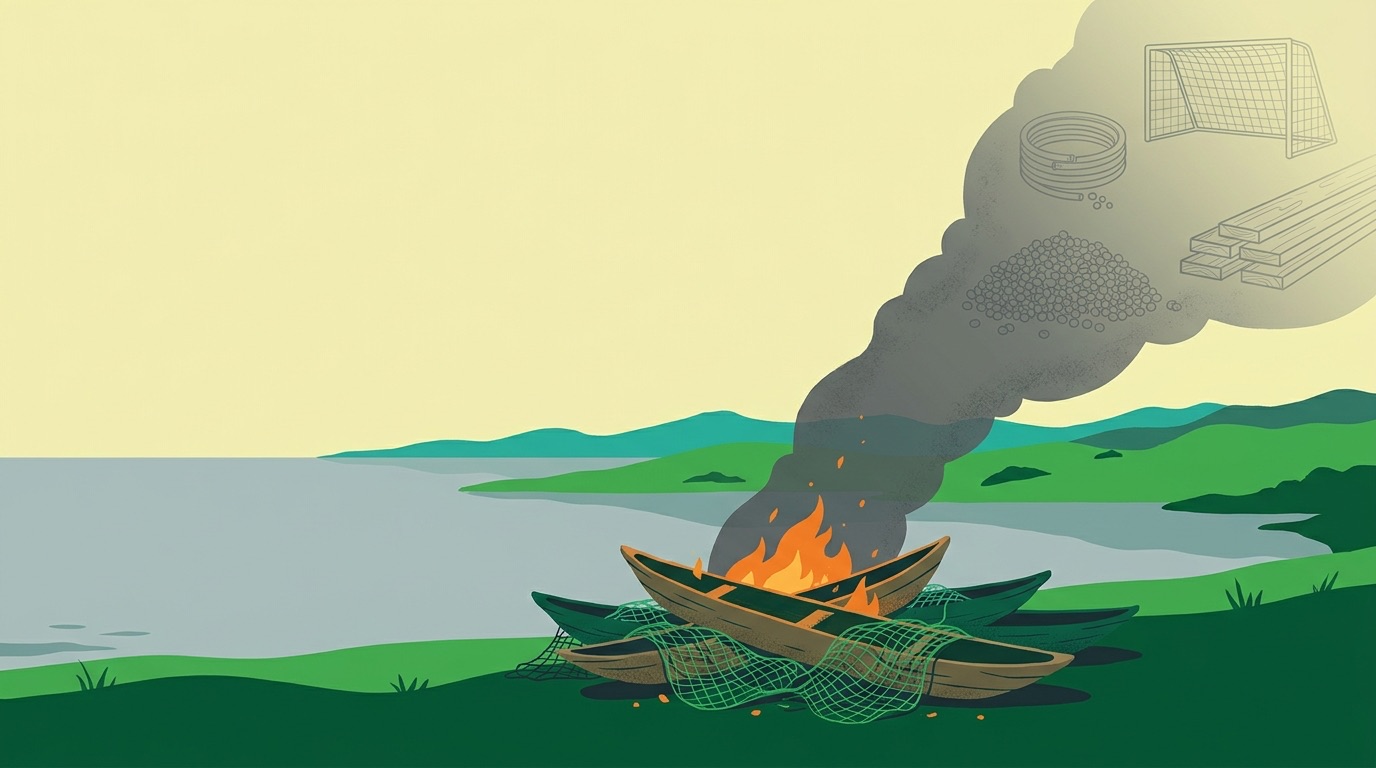
Wooden fishing boats are stacked like firewood on the shore of Lake George. Between them, heaps of green nylon net are melting into the flames. A column of black smoke rolls out over the water. In the foreground, a cluster of officials stands and watches, one with a notebook in hand.
This was Monday, 19 October. The UPDF’s Fisheries Protection Unit was burning 280 boats, 30,000 pieces of monofilament netting and 50 fishing baskets. By their own estimate, it was Shs1 billion’s worth of gear.
I’ve seen this photograph before. So have you.
Same fire, different lake
In August 2021 it was Lake Albert: 2,093 boats and 15,590 nets set ablaze in a single operation.
In June 2023 it was Ntoroko: more than 500 boats and 20,000 nets, worth Shs2 billion.
In April 2024 it was Kawongo on Lake Kyoga: Shs423 million.
In June 2025 it was Katunguru, on this very lake: Shs431 million, burned.
In July 2025 it was Lake Kwania: Shs14 billion, torched. The biggest bonfire yet.
Add up just the operations that put a price on the gear, and you get nearly Shs18 billion. That’s only what made the news. This is not a one-off. It is a habit.
Let me be clear about one thing
I am not defending illegal fishing. Monofilament nets are a disaster. They scoop up fish before they have had the chance to breed, and they are emptying our lakes. They have to come off the water, and the people enforcing the law have a hard, thankless job.
My quarrel is not with removing the gear. It is with burning it.
We tell grandmothers not to burn rubbish
Here is the irony that keeps me up at night.
For years, Ugandans have been told not to burn their household waste. Our own National Environment (Waste Management) Regulations, 2020 direct every local government to make bylaws controlling open burning. A grandmother in Wakiso who lights a pile of plastic bags behind her house is the one doing something wrong.
Then the state builds a bonfire of nylon the size of a house on the shore of a protected lake, and photographs it for the news.
Fishing nets are plastic. Burn nylon in the open and you get fine soot, carbon monoxide and hydrogen cyanide. You also get dioxins and furans, some of the most toxic chemicals humans have ever made. The Stockholm Convention, which Uganda has signed up to, names open burning as a source of exactly these chemicals and asks countries to cut it.
And they don’t float away politely. They settle on the soil and the water. Dioxins build up in fat, including the fat of fish. So we burn the nets to save the fish, and then the smoke poisons the fish.
On Lake George, of all places. It was Uganda’s first wetland protected under the Ramsar Convention, in 1988. It sits next to Queen Elizabeth National Park. It drains through the Kazinga Channel into Lake Edward. When we light a fire on that shore, we are not protecting the environment. We are performing protection, at the environment’s expense.
Shs18 billion of ash
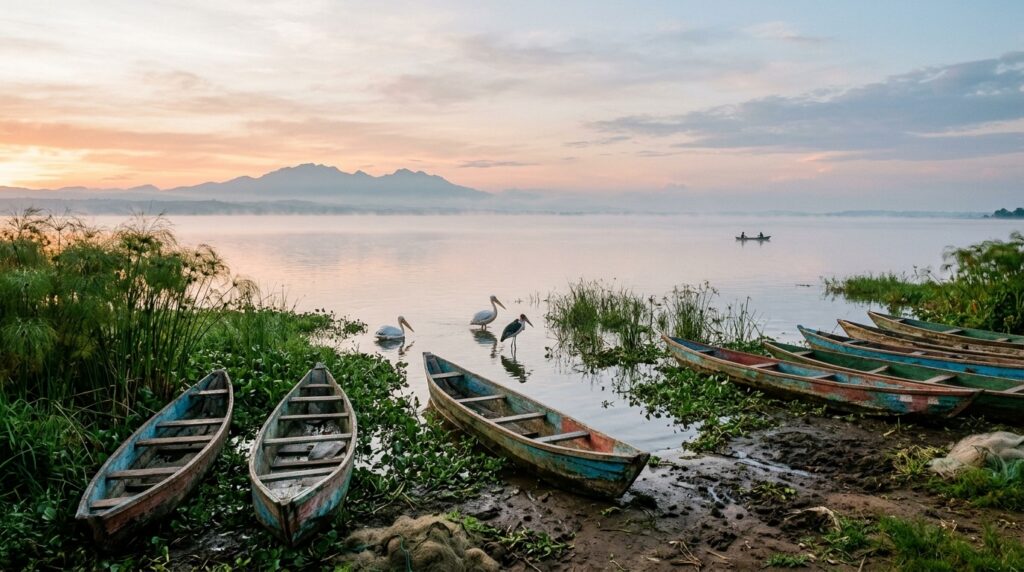
Uganda is not a rich country. Yet we keep setting fire to things of value.
A wooden boat is timber, labour and, very often, a family’s single biggest asset. A mountain of nylon net is a recyclable raw material that factories elsewhere pay for. Fire turns all of it into ash.
And who loses? After the 2023 burning in Ntoroko, the FPU commander said it himself: most of the owners “are very poor and had acquired loans to buy the equipment”. The boat is gone. The loan is not.
Now here’s the detail that stopped me cold. At Mahyoro, the same week, local leaders told reporters that they can’t properly patrol the lake because they have no motorised boat engine.
Burn 280 boats. Own zero patrol boats. You couldn’t make it up.
The fire is the easy part
A bonfire makes a good photo and a good headline. It doesn’t fix anything, because the problem starts long before anyone is caught with a bad net.
- Most fishing is already illegal, on paper. A 2023 value-for-money audit found that 76 per cent of vessels and fishers on Uganda’s waters were unlicensed. The minister at the time admitted that many fishers can’t afford the legal gear.
- Licences are scarce, and allegedly for sale. Lakes George and Edward are now capped at 33 licensed boats per landing site. Two days before the Mahyoro fire, fishers in Kasese told a minister they had been asked for Shs4 million to Shs7 million for a licence that officially costs Shs150,000. He has ordered the police to investigate.
- The fish don’t respect borders. We share Lakes Albert and Edward with the DR Congo, and Ugandan fishers say the rules on their side are not matched across the water.
Put yourself in a fisher’s shoes. The legal licence costs more than a new boat, and the legal net is out of reach. So you borrow, buy the cheap illegal net, and go fishing. The net gets seized and burned, and you still owe the money. Next season, you do it again. That’s not enforcement. That’s a treadmill, and we’re paying for the fuel.
What I’d do instead
None of this is complicated.
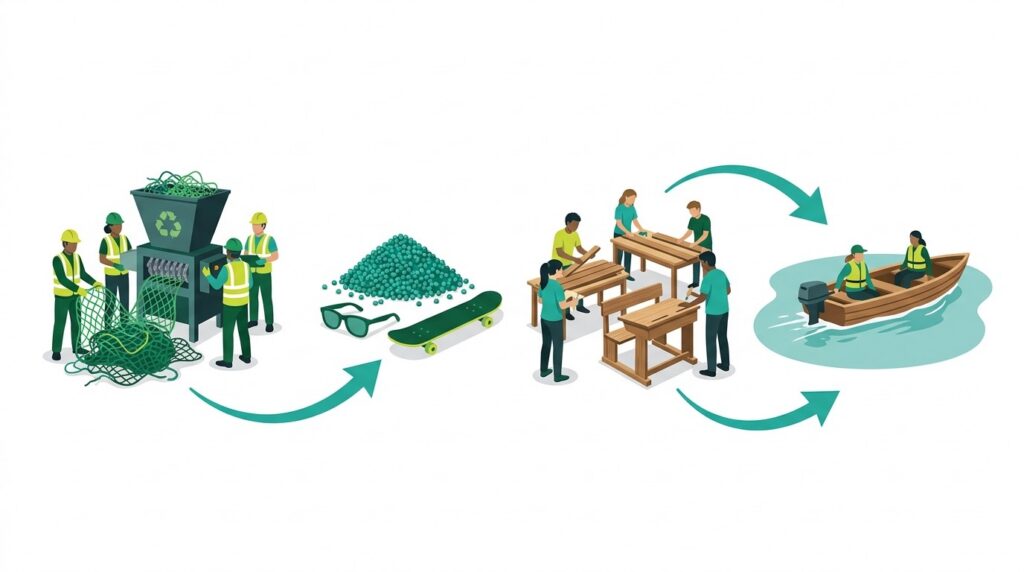
Shred the nets, don’t burn them. A net cut and shredded under supervision will never fish again, just like a burned one. The difference is that shredded nylon can be recycled. Companies like Bureo in South America already turn old fishing nets into skateboards and sunglasses. Uganda’s recyclers could do the same.
Stop punishing the hull. Many boats are seized because they are unlicensed, not because there is anything wrong with the boat. Forfeit them to the state and put them to work. Give the first one to Mahyoro’s patrol team. Give others to vocational schools, or allocate them to licensed fishers through an open process. Hulls that are truly substandard can be broken up for timber for school desks.
Make destruction transparent. The one thing a bonfire does well is prove the gear is gone. A public inventory, a witnessed shredding and a published record of where every kilogram went would prove the same thing, without the smoke.
Don’t sell the nets across the border. Auctioning seized boats and engines under strict conditions? Worth discussing. Auctioning nets for “export” on lakes we share with our neighbours? That is just selling them back to ourselves.
Fix the licences. Charge what the law says, publish who gets the 33 slots, and help fishers get credit for legal gear. If honest fishing is out of reach, dishonest fishing will fill the gap.
Count fish, not ash. “Shs1 billion destroyed” tells us how much was taken away, not whether the lake is healing. Report on catch sizes, fish stocks and licensing compliance instead. Those are the numbers that matter.
Back to that photograph
I keep coming back to that picture from Mahyoro, and to the question nobody standing around that fire seemed to ask: are we protecting this lake, or are we just setting it on fire?
Our lakes deserve protecting. But not at the cost of our air, our money, and the credibility of every environmental message the state sends to its citizens. The next time gear is seized, let’s do the harder, smarter thing.
Let’s stop the bonfires.
Alaso Marylyn is an environmental activist and policy advocate based in Kampala. CEGER publishes a range of voices on governance, environment and public health; views expressed are the author’s own.

Leave a comment